NY Times Hails Doctor for Group That Sends Dangerous Abortion Drugs by Mail

This morning, I read a long New York Times article about a group that mails chemical abortion drugs all across the world.

Rebecca Gomperts began Women on Web to provide abortions in countries where Telemed abortionsmost preborn babies are protected by the law. NYT hails Gomperts as a heroine for her abortion work, implying that she is saving thousands of desperate women from unsafe abortions.

According to the article: “Almost 40 percent of the world’s population lives in countries, primarily in Latin America, Africa, Asia and the Persian Gulf, where abortion is either banned or severely restricted. The World Health Organization estimated in 2008 that 21.6 million unsafe abortions took place that year worldwide, leading to about 47,000 deaths.”

Of course, they fail to mention that those abortions also took the lives of 21.6 million preborn babies.

Now, Gomperts’ motives seem good but they are extremely and dangerously misplaced (I talked about this in a previous blog). She seems to believe that her abortion work will help women and protect them from back-alley abortionists like Kermit Gosnell or desperate do-it-yourself attempts.

But her work and her motives seem quite ironic. First, she fails to acknowledge that an abortion involves two people, one of whom almost always ends up dead; and second, her work strikes me as similar to the unsafe abortions that she says she is trying to protect women from.

Her group mails RU-486 abortion drugs to women and instructs them by email about how to take the drugs. The group also counsels women to hide the abortion so that they won’t get in trouble with the law. No doctor’s visit, no connections to local medical staff  if something goes wrong.

When a woman emails, Gomperts said she tells them, “We cannot judge your situation over a distance, so we advise you to visit your doctor. This is the limitation of the service.”

Gomperts may mean to help women, but she is doing it by selling women a dangerous abortion procedure and then abandoning them to deal with the consequences alone.

Women don’t need more abortions. Our world, at 21.6 million per year, doesn’t need more abortions. I just hope Gomperts will come to realize that and redirect her efforts toward supporting both women and their babies, which is what our world really needs more of.


Former Abortion Counselor Says Her Problem Was Misplaced Compassion for Women

Have you ever wondered, “Why, oh, why would someone ever work at an abortion center?”

Linda Couri, a former Planned Parenthood counselor, answers, “Good intentions.”

But, Couri says, “The road to Hell is paved with good intentions.”Mom-and-Child

I listened to Couri’s story a few days ago through LifeNews.com, and her honesty and candor impressed me. Her story is about an hour long, but it’s well worth watching here.

She talked about something I’ve long suspected about many of the people who work at abortion centers like Planned Parenthood. They have good intentions. They truly want to help women. But their compassion is misplaced (all for the woman, none for the baby).

Couri said she took a pay cut to work at Planned Parenthood, because she truly wanted to help women in difficult circumstances. When she met with women who were unexpectedly pregnant, afraid and unprepared for motherhood, she counseled them to abort. She thought it was the best option.

Only after a series of events did Couri realize the terrible mistake in her reasoning and its consequences. One day, a teenager asked if she was killing her child. Couri struggled to answer, but the question haunted her. Later, she began reading journal entries written by women as they were recovering from their abortions. Couri was shocked to find how distraught many of the women were.

And she wondered if abortion really helps women. She wondered how she could continue to justify killing preborn babies. When she realized the truth, she quit her job. Now she is a pro-life speaker.

I think it’s important that we really listen to pro-lifers like Couri because she helps us to understand why many abortion center workers and abortion advocates do what they do. If we work to listen and understand them, we can help encourage them to extend their compassion to both mother and child.

Know the Facts Before You Take the Ice Bucket Challenge

By now, I’m sure you have heard about the ALS Ice Bucket Challenge.

The fundraising effort for ALS (Lou Gehrig’s disease) has taken off like wildfire. QuestionmarkEverywhere on Facebook and Instagram, people are donating money to ALS research or taking a bucket of ice water over their heads.

Within the past few days, though, some pro-life advocates have raised concerns, because the primary organization receiving the support, the ALS Association, funds life-destroying embryonic stem cell research.

We certainly never want to discourage anyone from giving to a worthy cause. It’s amazing how much support and enthusiasm there’s been for helping people with ALS. Pro-lifers are spreading the word to donate to alternative research organizations for ALS. Find them here. The ALS Association also told the Washington Post that people may donate and specify that the money not be used for embryonic stem cell research.

Please feel free to contact us anytime if you’re not sure whether a non-profit is connected to embryonic stem cell research or abortion. You also can click here for a list of organizations that support embryonic stem cell research.

Cartoons, Cupcakes and Chalk: Six Pro-Life Ideas for Youth

October is Respect Life Month. What better time to get your youth group, Sunday school class, or children/grandchildren involved in speaking out for the right to life?

Here are six pro-life activities for young people this fall:

National Pro-Life Chalk Day on Thursday, October 2 – Grab a bucket of chalk, chalk2gather a group of friends, and head to a sidewalk near you. Use big letters and bold colors to write pro-life messages such as “Choose Life!” or “Heartbeat begins at just 21 days.” Click here for ideas and tips.

Wear your support for babies in the wombOrganize a group of people to wear pro-life themed T-shirt on a specific day or week, and encourage them to start conversations with their friends about why there’s always a reason to choose life.

Pro-Life Cupcake Day on Thursday, October 9 – Bake and decorate a big batch of cupcakes, and share them with people at work or school. The idea is to start conversatiCupcakeons with people about how every baby deserves a right to life – and a birthday!

Use your voice for life – Encourage students to enter our Pro-Life Oratory Contest. We have exciting changes this year. We’ve started a Novice Division for 9th and 10th grade students in addition to the Oratory Contest for 11th and 12th graders. And now, all students will be asked to record their speeches and submit the videos to us for judging. Students have the chance to win cash or a trip to New Orleans. Click here for details.

Use the power of the pen – Share our Pro-Life Essay Contest with junior and senior high school students. Winners will receive cash prizes, and the top two essays will be published in our state-wide newspaper, LifeLines. Click here for details.

Get to know Umbert the Unborn – Introduce younger children to the pro-life comic strip, Umbert the Unborn. Umbert is a preborn baby boy who goes on adventures in the womb. Visit creator Gary Cangemi’s website to find games, coloring pages, and other activities.

More Evidence that Candidate Tom Wolf Is Pro-Abortion

Tom Wolf, the millionaire candidate for governor, donates to America’s largest abortion chain, Planned Parenthood.

Wolf’s financial records from 2010 list donations to Planned Parenthood of Central PA, imagesaccording to this news report.

What did Wolf’s money support? In 2011, Planned Parenthood performed a record number of abortions: 333,964, according to its national report. Abortion made up 92 percent of Planned Parenthood’s pregnancy services, while prenatal care and adoption referrals made up only about 7 percent.

Wolf also received an endorsement from NARAL, which supports abortion on demand through all nine months of pregnancy.

It’s not difficult to see where Wolf’s priorities are.

Low-Income Women Don’t Want Taxpayer-Funded Abortions

A new abortion group is taking a bus tour this summer to push for taxpayer funded abortions. It’s a bold move, given that most Americans don’t want their taxes to pay for abortions, according to several polls. And the group knows it.

Mom-and-ChildThat’s why the “Be Bold” bus tour is couching abortion in terms of income inequality, an issue that’s more palatable to young Americans especially.

From the article:

“Thanks to the 37-year-old Hyde Amendment, the federal policy that prohibits taxpayer dollars from funding abortion services, the low-income women who rely on the Medicaid program often have no affordable options for ending a pregnancy. Hyde, which has spawned similar restrictions on the state level and in other government programs, ensures that abortion access has been firmly divided along economic and racial lines for nearly as long as it’s been legal in this country.”

The problem – well, one of the problems – is that the group assumes low-income women  want abortions. They don’t. A Rand study showed that 55 percent of low-income respondents oppose taxpayer funding for abortion. It’s actually the wealthy (56 percent) who want taxpayer-funded abortions for the poor, according to the study.

Forcing taxpayers to fund abortions seems like an excuse for not helping low-income families in the ways they want to be helped. Instead of pushing taxpayer-funded abortions on women who don’t want them, we should be offering more resources to help pregnant and parenting moms and their babies.

If someone you know is pregnant and needs help, click here or call the Pennsylvania pregnancy hotline at 1-888-LIFE-AID.

The Overpopulation Debate and Solutions to the World’s Problems

The other day I listened to a debate about overpopulation with Steven Mosher from the pro-life Population Research Institute and Robert Walker of the pro-abortion Population Institute.

GlobeWomanYou can watch it here. It’s about an hour long, but it’s worth listening to if you have time. Steven Mosher is a very knowledgeable and persuasive debater.

When I used to hear the word “overpopulation,” it always made me think of disappearing rainforests, endangered species, global warming, and poverty. Since I began working in pro-life, though, I’ve realized the scary implications of the overpopulation theory.

How do we stop overpopulation? We get rid of people (abortion, euthanasia). And how do we make it seem ok to get rid of people? By making some people appear less valuable than others (the preborn, the elderly and the disabled).

The heart of the issue really seems to come back to the value of human life. I’m not saying those other issues aren’t important. We need to take care of our planet and the plants and animals that live here.

But, as Steven Mosher argues, people have found innovative ways to solve these challenges, and will continue to do so – without killing other people.

Mosher summed it up very well in his response to Walker: “You see the problem as people. I see the problem as poverty.”

Abortion and euthanasia are the same way. There are better solutions to the world’s problems than killing innocent people. Our world doesn’t need more abortions, more euthanasia, or fewer people. Our world needs more people who will listen, care and treat others with the respect they deserve.

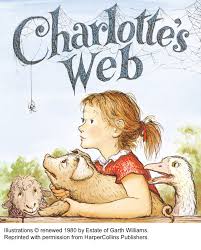
A Lesson from “Charlotte’s Web”

A few Sundays ago, when I was visiting my family, my little sister pulled out a paperback copy of “Charlotte’s Web” and asked if I would read to her.

CharlottesWebI hadn’t read the book in years – maybe not even since I was 8, the same age as my little sister. We sat down on the sofa, and I turned the pages to Chapter 1:

“Where’s Papa going with that ax?” said Fern to her mother as they were setting the table for breakfast.
“Out to the hoghouse,” replied Mrs. Arable. “Some pigs were born last night.”
“I don’t see why he needs an ax,” continued Fern, who was only eight.
“Well,” said her mother, “one of the pigs is a runt. It’s very small and weak, and it will never amount to anything. So your father has decided to do away with it.”
… Fern pushed a chair out of the way and ran outdoors. …
“Fern,” said Mr. Arable, “I know more about raising a litter of pigs than you do. A weakling makes trouble. Now run along!”
“But it’s unfair,” cried Fern. “The pig couldn’t help being born small, could it? If I had been very small at birth, would you have killed me?”
Mr. Arable smiled. “Certainly not,” he said, looking down at his daughter with love. “But this is different. A little girl is one thing, a little runty pig is another.”
“I see no difference,” replied Fern … “This is the most terrible case of injustice I ever heard of.”
A queer look came over John Arable’s face. He seemed almost ready to cry himself.
“All right,” he said.

Fern’s words almost seem prophetic, “If I had been very small at birth, would you have killed me?” Today babies in the womb are killed just because they may have a disability or abnormality. Many parents are pressured toward abortion because their baby is imperfect in the world’s eyes. Our society justifies these babies’ deaths with excuses: The baby may suffer, or the baby could be a burden for the family, or the baby may not live long anyway. I think the problem lies with our flawed perspective, not these children’s lives.

I was really struck by Fern’s example. She fought and pleaded for a life who many didn’t see as valuable. She gave up her time to provide the extra care and attention that that life needed.

Fern approached the situation from the simple, untainted logic of a child. She didn’t think twice. She didn’t question whether a life was worth saving, because it never occurred to her to question the value of a life at all. She understood that every life deserves protection, no matter how long they live or how much care they need.

I’m so glad “Charlotte’s Web” is still a classic on children’s bookshelves. We need more heroines like Fern.

State Reports: Philadelphia Abortion Center Not Informing Women of Risks, Alternatives

A Philadelphia abortion center did not inform women about the risks and alternatives to abortion as is required by law, according to inspection reports from the Pennsylvania Department of Health.

imagesThe Philadelphia Women’s Center and all Pennsylvania abortion centers are required to inform women about abortion risks, alternatives, and the approximate age of their preborn baby at least 24 hours prior to the abortion. However, the Philadelphia abortion center appears to be skirting the law.

According to a state inspection report from Oct. 9, 2013, inspectors found the abortionist’s signature was photocopied onto documents that indicate patients have received the information. Three women also didn’t sign the forms to indicate that they had receive the information.

But that’s not all. Records indicated that the abortionist didn’t inform eight other patients either.

This LifeNews.com story details even more deficiencies at the Philadelphia Women’s Center, including:

  • A discrepancy about medications given to a woman who was hemorrhaging and had to be taken to the hospital.
  • A broken fire alarm that the state has warned the facility about five times.
  • Dirty cleaning supplies that were put right next to clean linen.
  • Expired medication, and medication that wasn’t properly stored.

The state Department of Health routinely inspects abortion centers in Pennsylvania, thanks to new abortion center regulations passed in the wake of the Kermit Gosnell discoveries. To view the abortion center inspection reports, click here.

New Bill Would Deny PA Women Information about Abortion Risks

By Maria Gallagher, Legislative Director

The abortion industry and its allies are lobbing another legislative weapon in their War on Women.

Women Have a Right to Know!The weapon of choice, in this case, is a deceptively named Pennsylvania bill called the “Patient Trust Act.”

House Bill 2303 is sponsored by known abortion advocate Rep. Dan Frankel (D-Allegheny County). The Senate version, Senate Bill 1456, is sponsored by a one-time pro-life legislator who is now running for Lieutenant Governor on a pro-abortion platform, Sen. Mike Stack (D-Philadelphia County).

The sponsors, who are being championed by a pro-abortion blog which partners with the nation’s largest abortion operation, Planned Parenthood, claim they are trying to rid politics from the doctor-patient relationship. But the legislation would do exactly the opposite — insert politics where it does not belong.

The bills state that health care practitioners should not be required to provide information to a patient that is not “medically accurate.” The legislation also says that the government should not require a health professional to perform a medical service that is not “evidence-based.”

Who could argue with that? Even pro-life legislators may be deceived into sponsoring it.

But the devil is in the details.

In their quest for legitimacy, the sponsors are pointing to a report by the National Partnership for Women & Families, which claims that a political agenda is “undermining women’s health care.”

One problem here. The group has a radically pro-abortion political agenda of its own. The organization—and the legislation’s sponsors—are upset with common sense protective laws that inform women about the risks of abortion. That is their real aim—to prevent women from obtaining critical information about abortion-related health risks.

And this points to the radical nature of the pro-abortion movement. They want to declare an information blackout in abortion facilities. They want to ignore scientifically-based research showing that abortion can increase a woman’s risk of sterility, substance abuse, depression, and premature delivery of subsequent babies. If a woman knows that, she might think twice about having an abortion—and that could hurt the abortion facilities’ bottom line.

Keeping women uninformed leaves them vulnerable—weak, rather than empowered. Beware of “patient trust” legislation which may be coming to your state. It’s not about good medicine. It’s about preventing the kinds of protective laws which can help women make sound health decisions that positively impact themselves and their families.