Pregnancy Resources Free Women from Pressure to Abort

An 18-year-old woman found herself all alone when she discovered that she was pregnant.

She was estranged from her mother, and the boyfriend who she was living with told her that she had to either move out or have an abortion.Choose Life!

Who could she turn to?

Fortunately, someone directed the young woman to a pregnancy resource center where, for the first time, someone actually listened to what she wanted. She felt encouraged, and the volunteers helped her to reconcile with her mother. Through the pregnancy center, the young woman received the resources and support that no one else was giving her.

She is just one of the hundreds of thousands of Pennsylvania women who found help at a pregnancy resource center.

Here in Pennsylvania, we recognize the critical need to provide support for pregnant and new moms so they don’t feel like abortion is their only choice. Real Alternatives, the state alternatives to abortion program, believes the answer to a crisis pregnancy is not to get rid of the baby but to get rid of the crisis.

“If the best we can do in this society is offer a woman in a crisis pregnancy an abortion, we have ceased to become the greatest nation on earth,” said Kevin Bagatta, the president and CEO of Real Alternatives.

Every year, Real Alternatives centers help more and more women and their families. Last year, 19,325 women were provided comprehensive free, caring and compassionate pregnancy and parenting services, according to a press release from the organization.

Their services are very much needed. Studies have found that more than half of all abortion-minded women are being pressured into making the decision. Pregnancy centers offer support to women so they don’t feel trapped into having an abortion.

Women and their babies deserve better. If you or someone you know is pregnant and needs help, click here to find pregnancy resources near you.
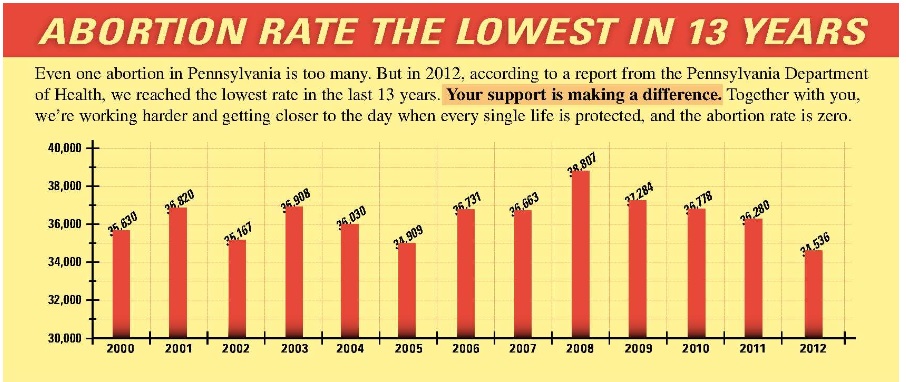
Each of the 34,536 Abortions in PA Is a Missing Life

Today, I want to share our new graph of Pennsylvania’s abortion numbers in the past 13 years. I like looking at graphs and numbers and the trends that they show.

This new graph shows a downward trend in the number of abortions performed in our state. In just one year, abortion numbers dropped by 5 percent. That’s encouraging.

2014AbortionGraph

Sometimes, though, I get so caught up in looking at the numbers that I forget about what they represent. We lost 34,536 human lives in our state to abortion – in just one year.

I want to encourage you that when you look at this graph, don’t just look at the bars and the numbers. Think about the faces and smiles of these missing children. Think about a baby’s laugh or piercing cry. Think about them crawling, then talking, then imagining and dreaming. And remember how all of this was cut short when that baby lost his or her life to abortion.

Yes, we need to look at these numbers. They help us to understand what is happening in our state and what can be done to keep the abortion rate declining.

But we can’t stop there. We need to look, make a plan, and then take action, because these aren’t just numbers on a page. Every number represents a precious human life lost to abortion.

Young Woman’s Abortion Death Reminds Us There Is Still Inequality, Injustice

At least some justice has been done for a black woman who died from a botched abortion.

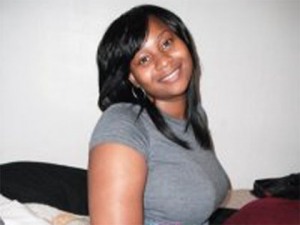
In 2012, Tonya Reaves bled to death at a Chicago Planned Parenthood. The abortionist killed her baby, injured her, and the reportedly waited five hours before sending her to the hospital.

tonyareaves

Tonya Reaves

The case involving Reaves’ death settled this month: Planned Parenthood is required to pay $2 million to Reaves’ young son, according to LifeNews.com. Sadly, the abortionist continues to work; and the Planned Parenthood is still open. How can this be?

I grieve when I think of this young woman. They probably didn’t tell her that pregnancy resources are available for her and her baby. They didn’t tell her that abortion can hurt or kill her as well as her preborn baby. They didn’t tell her that an abortion could leave her older child motherless.

Abortion centers target women of Reaves’ age and race. According to a Life Issues Institute study, 79 percent of Planned Parenthood abortion centers are located in minority neighborhoods.

Abortion statistics also point to racial targeting. In Pennsylvania, blacks make up about 11 percent of the population but have 41 percent of the abortions, according to the 2012 report from the Department of Health.

This month is Black History Month, a time when we recognize great men and women who helped to shape our nation. From inventors like George Washington Carver to civil rights leaders like Martin Luther King Jr. and Rosa Parks, they have done so much to create a culture that respects and values all human beings.

But the work is not done. Quietly, abortion centers are eroding those values.

This February, let’s not just remember these great leaders. Let’s follow their example and continue to fight against discrimination – not just in the black community but in every community where abortion occurs. Let’s fight to protect every human life – born and unborn!

Abortion from a 7-Year-Old’s Perspective

A few weeks ago, my parents and my 7-year-old sister came to hear me speak during a pro-life rally in our area. Though my little sister may not understand the details about abortion, she knows that abortion kills a baby in its mommy’s belly.

girlBut during the rally, my sister heard something that she had never thought about before – abortion centers.

As her innocent mind processed the thought, she looked up and asked my mom, “Is that where they kill the babies?”

“Yes,” my mom answered.

“Do they kill children there, too?” my sister asked.

“No,” my mom replied. “Just babies in their mom’s bellies.”

“But they don’t kill children?” my sister asked again.

“No, it’s against the law to kill children,” my mom said.

My sister’s question came from a logical conclusion. If babies aren’t protected then children must not be either, because there is no significant difference between a baby and a child that would justify killing one and not the other.

It didn’t make sense to her why some people are protected and valued in our society and others aren’t. Human life can’t both be valuable and not valuable. It either is or it isn’t. That abortion’s legal told her that human life isn’t protected – and those who can’t defend themselves are the most vulnerable. So, a child like herself could be killed, too.

Should there be a line that determines when humans have value? Some say it’s at viability, others say when there’s a heartbeat, and others say at birth. Some even argue that the ability to reason should be the dividing line, which would making killing infants ok, too.

These lines we draw are so arbitrary, meaningless. My 7-year-old sister gets that. Human beings are valuable because we are human beings. And it’s as plain and simple as that.

Abortion Numbers in U.S. Decline to Near-Historic Low

Abortion rates are falling steadily in the United States as more pregnant women gain access to the education and support that they and their families need.

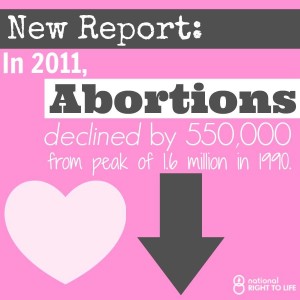
2011AbortionNumbersA new report shows U.S. abortion numbers at a near-record low in 2011. There were 1.06 million abortions in 2011, down 13 percent from 2008, according to a new report by the pro-abortion Guttmacher Institute. The report reflects a similar trend here in Pennsylvania, where abortions declined by almost 5 percent in one year from 2011 to 2012.

Now more than ever, women are choosing life as they discover the truth about a baby’s development in the womb. And pregnant and new moms can access material and emotional support through pregnancy resource centers in their own communities.

Yet, 1 million abortions per year is still a massive tragedy in our country. Pro-lifers are making progress in helping to protect preborn babies and their mothers from abortion, but there’s still a lot of work to do.

Consider volunteering with one of our 40 chapters as we help Pennsylvanians all across the Commonwealth to see that there’s always a reason to choose life!

Stars Shine Light on Pregnancy Centers in Movie ‘Gimme Shelter’

I was excited when I heard about the big-name actors who are starring in a new pro-life movie.

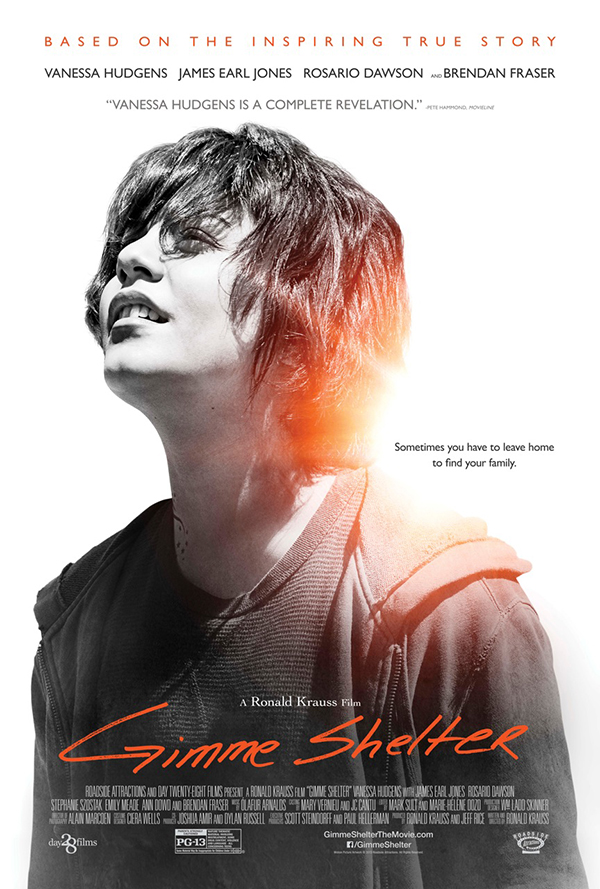
“Gimme Shelter” features Vanessa Hudgens (remember “High School Musical”?), James Earl Jones, Rosario Dawson, and Brendan Fraser. GimmeShelterTogether, they present a clear message of hope for pregnant women who are facing troubled times. Watch the trailer here.

The film follows a teenager named Apple who runs away from her abusive mother. Soon after Apple finds her long-absent father, she discovers that she is pregnant. Her father and his well-to-do wife insist that the best thing for Apple is to get an abortion. But while Apple is in the abortion center, she decides that she wants to keep her baby. So, she runs away. After a tragic event, Apple finds hope and friendship at a shelter for pregnant women and moms.

“Gimme Shelter” presents a realistic picture of how harsh life can be for a girl so young. Apple moved from foster home to foster home, faced abuse and neglect, loneliness, and homelessness.

The film shows just how vitally important pregnancy centers are to women like Apple. They support and empower women when no one else will. They walk with the women even when – especially when – it’s difficult, and they don’t give up.

Put “Gimme Shelter” on your to-watch list. The film is rated PG-13 for some thematic elements. It is currently in theaters. To find where it’s showing in your area, visit the “Gimme Shelter” website.

March for Life Is Rally of Faith in ‘Plain, Decent, Everyday Common Rightness’

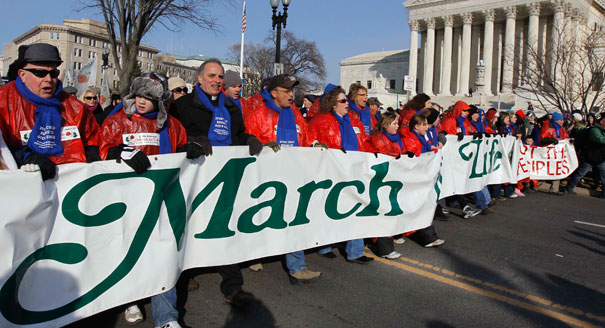
Hundreds of thousands of people braved the bitter cold last week to participate in the March for Life in Washington, D.C. on January 22. Despite the sub-zero wind chill, people from all across the country walked to restore the right to life for the preborn.

After the March, my friends and I walked to the Lincoln Memorial. I stood between those humbling columns and remembered the scenes from one of my favorite movies, “Mr. Smith Goes to Washington.”smith3

The film reaches its turning point as a no longer naive young politician sits in the shadows of the Lincoln Memorial, having just been crushed by a political machine. From D.C. to his hometown, the news media is being maneuvered against him.

He feels so small, so helpless, so foolish to have believed that the truth would prevail. He feels beaten, ready to go back to his small town. What can one man do against such corruption, such injustice?

Then a friend finds him in the shadows of the Lincoln Memorial. She reminds him that he shouldn’t place his faith in people but in “plain, decent, everyday common rightness.” She points to Abraham Lincoln, a man who refused to stop fighting though the odds were stacked against him and the opposition was severe. He had faith that “rightness” would win.

“All the good in this world came from fools with faith like that,” she tells the young Mr. Smith.

As I stood there, I felt like Mr. Lincoln and Mr. Smith. The media ignores pro-lifers or distorts the truth to make us look weak. Our opposers paint us as liars and fools.

Yet, I found hope in the memory of Mr. Lincoln. He had faith against the odds when he fought to require rights and protection for every human life.

I have faith that one day our country will protect every human being’s right to life inside the womb and out. Until then, we will continue to march, fighting for “plain, decent, everyday common rightness.”

Do you know Roe v. Wade?

When the U.S. Supreme Court handed down its infamous abortion decision 41years ago, it created waves that continue to hurt millions of Americans today.

Roe v. Wade and its companion case, Doe v. Bolton, caused a devastating tidal wave that eroded Americans’ right to life.110124_march_for_life_ap_328

Yet, after four decades, Americans still seem to be confused about what Roe and Doe really did. For proof, just take a look at two polls on the abortion issue.

According to a January 2013 NBC/Wall Street Journal poll, 70 percent of Americans do not want Roe v. Wade to be overturned.

But, according to a December 2012 poll from Gallup, 70 percent of Americans want restrictions on abortion – which is the exact opposite of what Roe did.

Let’s review the history:

The U.S. Supreme Court ruled on Roe and Doe on January 22, 1973, specifically noting that the cases should be read together.

According to Roe v. Wade, abortion should be a private decision between a woman and her doctor. During the first six months of pregnancy, a woman may have an abortion for any reason.

In Doe v. Bolton, the justices said a woman may have an abortion in the last three months if she has a “health” reason. The court then defined “health” so broadly that basically anything qualifies.

The two cases struck down all state abortion restrictions and legalized abortion through all nine months of pregnancy.

In 1973, not a single state had abortion laws as broad as those created by Roe and Doe. In fact, the majority of states protected life at the moment of conception.

Americans need to know the truth about Roe v. Wade and how it devastated our nation, how it allowed for the slaughter of 56 million babies, how it led to pain and regret for millions of women and men.

Fortunately, Pennsylvania has been a leader in helping to restore some protections for preborn babies. We continue to work hard every day to achieve a future where every human life is protected from conception to natural death.

The Devastating Effects of a ‘Right’ to an Abortion

Our organization runs an essay contest every year for students in junior and senior high school. I am always surprised by how profound these students can be.

But last year, there was one essay that really stuck with me. It was written by a middle school girl, who was thinking about women and abortion.SilentNoMore

She wrote: “I believe women are strong. Women are strong to give birth and strong enough to live with rejection. I don’t, however, think women are strong enough to live with the fact that they couldn’t be strong enough to do what their mothers did for them – give the gift of life.”

This young woman saw through the faulty pro-abortion arguments and pointed to a huge flaw: the idea that abortion is a good thing for women, and it should be a woman’s right.

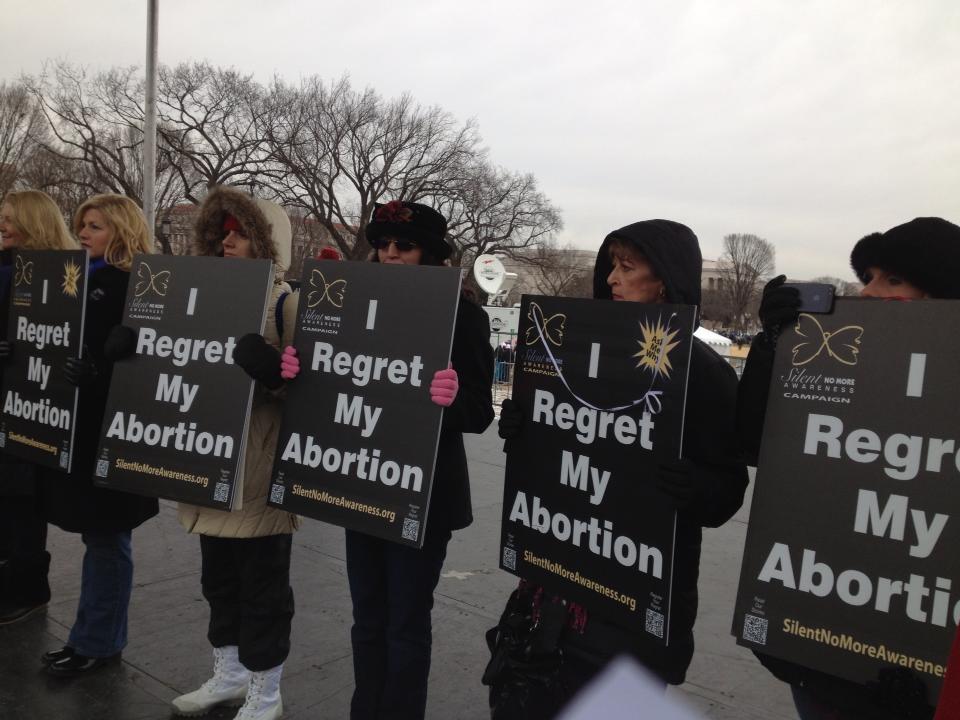
So many women who have exercised their “right” to an abortion now understand the consequences of that “right.” As evidence, just look at the testimonies at the Silent No More Awareness Campaign:

Deborah found out she was pregnant when she was 17 years old. Her boyfriend urged her to have the abortion and she agreed, afraid to tell her parents that she was pregnant.

“I realized that I had done the most awful thing I could ever have done, and it had been done in the most inhumane way. I paid someone to kill my unborn baby. I could see it happening. I could see the doctor doing things inside of me to my baby in order to kill it. After that, I felt that I should suffer, and that it should hurt. I felt cheap and unworthy.”

Maggie prayed for a little girl, but when she became pregnant, she felt daunted by her husband’s and mother-in-law’s abuse. So, she had an abortion. Later, as she began her own healing process, she discovered how her abortion also hurt her other children.

“The consequences of abortion had not only devastated my children’s lives… but soon I discovered how destructive the consequences of abortion also had affected my other sibling’s lives. My brother’s girlfriend aborted their child when they were teens. Today my brother is 44 and childless. I cannot begin to tell you the effects this has had on him every day of his life.”

Women like Maggie and Deborah are not alone. Hundreds of others share their testimonies on Silent No More’s website. Read more testimonies here, and learn more here about post-abortion healing for women and men.

Abortion is a right that never should have been. Hundreds of thousands of women and men are hurting because of it. Some tell their stories, some don’t. And 56 million more will never have the opportunity to share any life story – because our society calls abortion a “right.”

Buffer Zones Hurt Women Seeking Alternatives to Abortion

The U.S. Supreme Court is getting a lot of attention as religious groups and business owners of faith battle the Affordable Care Act HHS Mandate.

But the high court is about to hear another important case related to abortion and sidewalk counseling.

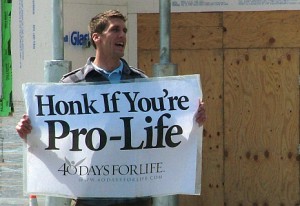
40 days for lifeIt involves buffer zones around abortion centers. The justices will look at a Massachusetts law that created a 35-foot buffer zone around abortion centers, supposedly to “protect” women from pro-lifers who are trying to offer them a better option.

Boston Globe columnist Jeff Jacoby recently pointed out a serious flaw with these buffer zones — they not only restrict pro-lifer’s free speech but they also “buffer out” women’s right to hear the information that pro-lifers offer.

Jacoby writes:

The (Massachusetts) law, signed by Governor Deval Patrick in 2007, makes no allowance for peaceful or quiet protest. It doesn’t permit an individual to simply stand in silence, holding a sign or offering pamphlets. It forbids approaching even a willing listener who would like to hear — who might be desperate to hear — about a realistic alternative to abortion. The 35-foot boundary is marked with paint, and anyone who steps over it can be sentenced to as much as 2½ years in prison.

For years, the abortion industry has been pushing for buffer zones to help them hide the facts about abortion. They don’t want women to know the truth that abortion kills a baby and harms many women physically and emotionally. They don’t want women to know that help is available for them and their babies.

More than ever before, pregnant and new moms have access to counseling, temporary shelter, diapers, maternity clothes, and much more. But abortion providers are trying to prevent women from knowing that it’s there.