“Roe” Wanted Roe v. Wade Reversed. THAT is Her Legacy.

By Maria Gallagher, Legislative Director

gallagher@paprolife.org

180px-Norma_McCorvey

     You can hear a smile in a voice.

It is one of those interesting facts of communication that I learned in a radio journalism class which proved to be helpful far beyond the confines of the classroom.

As a reporter, I heard a range of emotions in the interviews that would be recorded for broadcast–sadness, anger, pride.

Over the past few days, I have been reminded of a voice that answered the phone when I was working on a story about abortion.

The voice belonged to the “Roe” of the tragic U.S. Supreme Court case Roe v. Wade, which brought about the legalization of abortion nationwide in 1973. Her real name was Norma McCorvey, and by that time, she had renounced the court decision that bore her pseudonym. She was striving to right a horrible wrong, to save the lives of preborn children, and to spare their mothers unspeakable pain and heartache.

Ironically, she was not the person I was calling to interview, so our conversation was quite brief.

But I heard much in her voice: Kindness. Compassion. Caring.

Norma McCorvey was once part of the abortion industry. But she died a pro-life champion.

It is common for those involved in court cases to wish the court had ruled differently. It is incredible for a winner of a case to wish she had lost.

“Roe” wanted Roe v. Wade to be overturned. This would be like saying the winning team of the last Super Bowl wished the second half never would have happened and that they had lost the biggest football game of the year.

But it was true. I could not only hear it in her voice–it was also apparent in the actions that she took to try to reverse a Supreme Court ruling that has led to the deaths of more than 59 million preborn children and the haunting grief of millions of mothers and fathers, grandparents and siblings.

Some Millennials may not know that the woman behind Roe, Norma McCorvey, reversed course and adopted a pro-life point of view. They may be stunned to learn that the woman who was the subject of the nation’s best-known abortion case never had an abortion herself–that the pregnancy that led to her being the subject of a court case ended in birth and subsequent adoption.

But as spectacular as Norma’s story may be, in a sense, it is not entirely unique.

Dr. Bernard Nathanson, the founder of the pro-abortion lobbying group known as NARAL, left the abortion industry behind and became an ardent supporter of the right to life. Abby Johnson, a former Planned Parenthood center director, left the business as well and now assists those who want to make a similar, life-affirming exit. Carol Everett, a former abortion center owner, became a passionate defender of life.

Add to that all those women who are a part of the Silent No More Awareness campaign–women who had abortions, but who now regret them. They are breaking the code of silence surrounding abortion so that other women can avoid such horrific tragedy.

These women cannot be silenced. And neither can Norma. Her voice lives on in video and in the minds of those touched by her call for the nation to embrace mothers and their children–and to abandon Roe v. Wade.

For if Roe no longer believed in Roe v. Wade, why should the Supreme Court? If the Court cannot hear the silent cry of the preborn child, perhaps quite soon it will listen to the words of women such as Norma. They are women who were once deceived by the lies of the abortion industry, but who found their voice when they rediscovered the hope that lies in fighting for life.

The nation owes it to Norma, and to all those other women, to end the epic human catastrophe caused by Roe v. Wade and to discard the unjust court decision once and for all.
The “Dred Scott argument” for Abortion

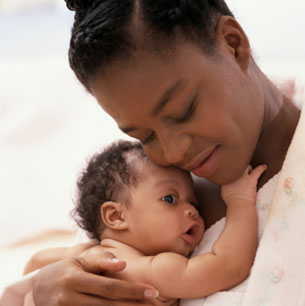
mother_and_child     Anyone who has been part of the pro-life movement for any length of time knows that there are certain arguments that the abortion industry and its allies make reflexively.  Perhaps they believe that if they continue repeating these poor arguments, their case will magically improve.

One such argument is the idea that Roe v. Wade is “settled law” and pesky pro-lifers should stop trying to rehash an issue that the Supreme Court has already ruled on.  I like to call this the “Dred Scott argument”, which is why I thought it would be an interesting one to explore during Black history month.

In Dred Scott v. Sanford, Scott was an enslaved Black man who sued for his freedom.  Sadly, in what many constitutional scholars now consider one of the worst Supreme Court decisions ever, the Justices ruled that neither Scott, nor anyone else of African heritage, could claim US citizenship, thus allowing the tragic practice of slavery to continue.

What does this have to do with Roe v. Wade and abortion in America?  As in the Dred Scott case, a terrible mistake was made in the Roe v. Wade decision.  In Dred Scott, the Justices determined one person was not as important as others simply because of his race…in Roe v. Wade, five Supreme Court Justices found a “right to privacy” in the U.S. Constitution that had never been there before, and used that newfound “right” to justify the killing of almost 60 million people and counting.

Many people did not agree with the Dred Scott decision. Should they have all just given up and gone home to allow the injustice of slavery to continue?  Of course not.  They doubled down on their efforts to have everyone, no matter what race or ethnicity, recognized as equal…and eventually succeeded in getting the 13th amendment passed and slavery abolished.  The same principle applies to pro-life advocates.  Just because the Constitution was misinterpreted doesn’t mean we pack our bags and go home…it means we continue to fight to end the injustice of abortion so that one day Roe v. Wade will fall into the ash heaps of history—where it truly belongs.

Pennsylvania Senate Votes to Ban Brutal Dismemberment Abortions

Diagram of a dismemberment abortion

HARRISBURG, Pa. –A ban on the brutal practice of dismemberment abortions has been approved by the Pennsylvania Senate.

The measure, Senate Bill 3, will make it illegal to cause “the death of an unborn child by means of dismembering the unborn child and extracting the unborn child one piece at a time from the uterus through the use of clamps, grasping forceps, tongs, scissors or similar instruments.”

Under the measure, the legal limit for abortions in Pennsylvania would also change from six months’ to five months’ gestation, reflecting the fact that modern technology has been able to save babies at ever-earlier stages of development.

“Taking the life of an unborn child by tearing the baby limb by limb from a mother’s womb is cruel and unconscionable. It is a gruesome practice which most Pennsylvanians want to see banned, according to a statewide poll of Commonwealth residents.  Not one Pennsylvania child should be subjected to this form of brutality—and not one mother should have to grieve a child killed in such a barbaric way,” said Maria Gallagher, legislative director for the Pennsylvania Pro-Life Federation, an affiliate of National Right to Life.

Senate Bill 3, which is sponsored by state Senator Michele Brooks (Crawford, Erie, Mercer, and Warren Counties), provides exceptions for the mother’s life or for the “substantial and irreversible impairment of a major bodily function.”

“Poll results show that support for a dismemberment abortion ban in Pennsylvania is actually higher among women than men,” Gallagher added. “Sixty-four percent of PA women want to see this heinous practice banned once and for all.  And they applaud those women lawmakers who are leading the fight to end this ultimate form of child abuse.”

 The bill now moves to the Pennsylvania House of Representatives for consideration. A similar bill overwhelmingly passed in the House of Representatives last legislative session.

Gosnell: The Untold Story of America’s Most Prolific Serial Killer

41G0SHhcvWL._SX329_BO1,204,203,200_

“…a filthy, flea-infested, excrement covered clinic with expired medicine, machinery and unsanitary instruments staffed by unlicensed, untrained employees.”

No, this isn’t a description of a local haunted house.  It is an inside view of the infamous “House of Horrors” abortion facility Kermit Gosnell ran in Philadelphia, as described in the new book “Gosnell: The Untold Story of America’s Most Prolific Serial Killer” by Ann McElhinney and Phelim McAleer.

The book does an informative job of walking the readers through the case itself, the grand jury hearing and subsequent trial, and introducing the villains and heroes involved.  It tells the story of Karnamaya Mongar, the woman Kermit Gosnell was convicted of killing…or as Gosnell referred to her “the Indian woman.”  It talks about the complicity of the state of Pennsylvania, media outlets, and the Philadelphia medical community in Gosnell’s crimes.  Finally, it gives chilling insight into Gosnell, as seen when the authors interviewed Gosnell in prison.

Partially in response to the horrific conditions found at Gosnell’s facility, in 2011 Pennsylvania passed a common sense bill further regulating abortion facilities.  The men and women of the Pennsylvania legislature should be commended for taking action to protect the health of safety of women-when so many other public officials did not.

National Right to Life Committee Press Release Regarding Nomination of Judge Neil Gorsuch

For immediate release: Tuesday, January 31, 2017
For more information: Tatiana Bergum, (202) 626-8825, mediarelations@nrlc.org

National Right to Life Committee Commends President Trump
For His Selection of Judge Neil Gorsuch as Successor to Justice Scalia

WASHINGTON – Today, the National Right to Life Committee (NRLC), the federation of 50 state right-to-life affiliates, commended President Donald Trump for his selection of Judge Neil Gorsuch to fill the U.S. Supreme Court seat vacated by the February 2016 death of Justice Antonin Scalia.

“All too often, our efforts to protect unborn children and other vulnerable humans have been overridden by judges who believe they have a right to impose their own policy preferences,” said Carol Tobias, president of National Right to Life.  “We are heartened that Judge Gorsuch appears to share Justice Scalia’s view that federal judges are constrained to enforce the text and original intent of constitutional provisions, and on all other matters should defer to democratically elected lawmakers.”

As a judge on the U.S. Court of Appeals for the 10th Circuit since 2006, Gorsuch has not reviewed any state or federal abortion laws. However, he showed support for conscience rights in two cases involving Obamacare mandates. He dissented from a ruling hostile to Utah’s attempts to curb funding for Planned Parenthood (Planned Parenthood Association of Utah v. Herbert). Gorsuch’s 2006 book The Future of Assisted Suicide and Euthanasia argued against the legalization of assisted suicide, and defended the idea that “human life is fundamentally and inherently valuable, and that the intentional taking of human life by private persons is always wrong.”

“Pro-life legislators and activists nationwide can have high confidence that as a Supreme Court justice, Neil Gorsuch will not join those who have nullified past efforts to protect the lives of unborn children and other vulnerable humans,” said Douglas D. Johnson, Senior Policy Advisor for National Right to Life.

Founded in 1968, National Right to Life, the federation of 50 state right-to-life affiliates and more than 3,000 local chapters, is the nation’s oldest and largest grassroots pro-life organization. Recognized as the flagship of the pro-life movement, NRLC works through legislation and education to protect innocent human life from abortion, infanticide, assisted suicide and euthanasia