Window to the Womb

Modern technology is an amazing thing.  At a family gathering over the weekend, my cousin and I were having a discussion with my father and our uncle about how much easier school was for us than it was for our parents.  When our parent’s generation needed to do research, they had to take books out of the library, and if they were lucky those books had an index in them to help them find what they needed.  Fast forward a generation, and my cousin and I were able to do the same research from the comfort of our dorm room in our pajamas on a desktop computer.  Now, our children can do the same research from a tablet or smart phone…who knows how their children will be able to access information!

Medical technology has come a long way as well.  Diseases like malaria or smallpox, once a death sentence, are now preventable.  Disorders like Down syndrome are far better understood now than they once were….and become more and more so every year.

Technology in the area of fetal monitoring has improved dramatically as well.  When I was in my mother’s womb, my parents were lucky to hear my heart beating.  Now, doctors can take a 3d ultrasound image of a child in the mother’s womb, print it on a 3D printer, and give it to the child’s blind mother so she can “see” what her baby looks like.  Who knows what they’ll be able to do by the time I am anticipating a grandchild!
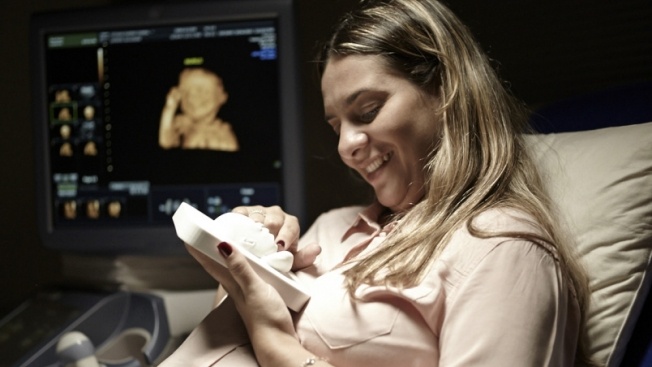
huggies-3d-fetus-blind-ultrasound-mom

Of course, there will always be science deniers.  In the case of medical technology, the science deniers are abortion advocates.  They continue to claim the child growing in the mother’s womb is just a “bunch of cells” despite the window to the womb ultrasound technology has become.  They deny viability despite being able to see a child dance, clap, and react in utero.  Ignoring the technology that allows surgery to be performed on babies in the womb, they continue to deny the babies’ “personhood”.

The truth is, you don’t have to be a “religious zealot” (as these science deniers like to call us in the pro-life movement) to recognize life when we see it.  Thanks to modern technology, we can see the heart beating by 3 weeks, reflexive movement after 6 weeks, and spontaneous movement before 8 weeks (I’ll never forget the delight of my wife and I, watching my son kick/punch the TV remote off my wife’s stomach). We can watch them practicing breathing by week 11, and by four months, nostrils and toenails become visible.

Once a baby is born, his or her proud parents are understandably excited to share the baby’s milestones—their trip home from the hospital, first bath, sitting up, eating foods for the first time, rolling over, crawling, walking, first words etc.  Thanks to the power of technology found in ultrasound, we don’t have to wait for milestones outside the womb…we can celebrate their tiny milestones of life and growth before meeting them face-to-face!

Doctor-Prescribed Death in the United States

During this series on euthanasia and assisted suicide we’ve examined what they are and what they are not, and we’ve examined how these laws are being abused overseas.  In this blog, we’re going to bring this information a little closer to home, literally and figuratively, and talk about the impact of these laws here in the United States, specifically in the states of Oregon and Washington.

Prescription Pad And Pills (Newscom TagID: depfirstlight016079.jpg) [Photo via Newscom]

On October 27, 1997, Oregon enacted the deceptively named “Death with Dignity Act” which allows terminally-ill Oregonians to end their lives through the voluntary self-administration of lethal medications, expressly prescribed by a physician for that purpose. A 2008 study found that more than one out of every 4 people in the study who had requested assisted suicide were depressed.  However in the last 5 years, only 2% of patients requesting assisted suicide were referred for psychological evaluations. To make matters worse for someone who may be understandably upset by a negative diagnosis, as Barbara Wagner discovered, her health plan will not pay for aggressive cancer treatments, but offered her coverage to kill herself.  Something else to consider is that because Oregon doesn’t require oversight or protection, almost 90% of those killing themselves did not have a prescribing physician present. In fact, at least one person who died by assisted suicide in 2015 obtained the lethal dose 1,004 days prior, even though the law requires a 6-month diagnosis.

None of this is to say that oversight is the answer.  Consider the case of Dr. Charles Bentz who had a patient who was understandably depressed due to his cancer diagnosis.  When the cancer specialist who Dr. Bentz had referred his patient to called and asked Dr. Bentz to provide the “second opinion” for his patient to die of assisted suicide, Dr Bentz, knowing his patient was depressed, and therefore not qualified for assisted suicide, refused.  Apparently the cancer specialist continued to call more doctors until he found one who would prescribe death for their mutual patient because the patient eventually died of assisted suicide.

Washington State has had similar experiences.  In 2014, there were 175 lethal prescriptions written, but only 126 assisted suicide deaths.  That means there are potentially 50 lethal doses of prescriptions out there floating around like a ticking time bomb.  What’s going to happen when some poor little child stumbles across one of those pill bottles?

The experiences of doctor-prescribed suicide in the states of Oregon and Washington have proven one thing.  They have proven that when someone has just been given terrible news, when they are suffering, they do not need a doctor coming alongside them with a bunch of pills to kill themselves. What they need is people like us to comfort, support, and encourage them, and to help them find that there’s always a reason to choose life.

World Down Syndrome Day


March 21st is World Down Syndrome Day so you may see an increase of articles about individuals with Down syndrome who have had great success in life.  People like restaurant owner Tim Harris, special Olympian Karen Gaffney, model Madeline Stuart, and actress Lauren Potter are just a few of the over 400,000 individuals in the United States proving every day that Down syndrome is not a disease or disability, just a disorder.

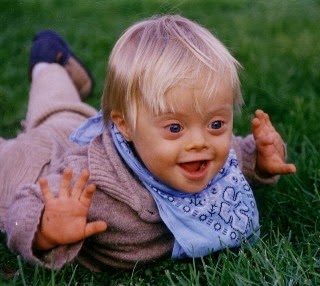
down syndrome baby

Unfortunately, doctors have failed to hear this message.  Far too often when Down syndrome is detected in a preborn baby, the first reaction of the doctor is to recommend an abortion.  The parents are told they should not have to be burdened with this child who may need some extra tutoring, or even therapy and extra time being educated, resulting in abortion of these special children 75-92% of the time.

In response to the doctor’s prejudice and discrimination, in 2014 the Pennsylvania legislature passed, and Governor Corbett signed, “Chloe’s Law”.  This legislation requires medical practitioners to give accurate information, provided by the PA Department of Health, about Down syndrome to the parents.  It also requires the parents be given up-to-date information reviewed by medical experts as well as information about support services for children with Down syndrome to parents whose preborn child has been diagnosed with the disorder.  The bill is named for Chloe Kondrich, an amazing 6th grader from Upper St. Clair who happens to have Down syndrome but could read by age 3 and has been in a regular classroom since first grade.

It is important that we do all we can to support those who have found out they are going to be blessed with a child with Down syndrome.  These parents are frequently given all the negative information and the challenges that can arise and they often feel pressured to end the baby’s life before it has a chance to start. The goal of Chloe’s Law, and our goal overall, is to make sure parents of not just babies with Down syndrome, but all pre-born babies, have all the information they need to not be afraid but to always choose life.


Two Sides to the “Free Speech” Coin

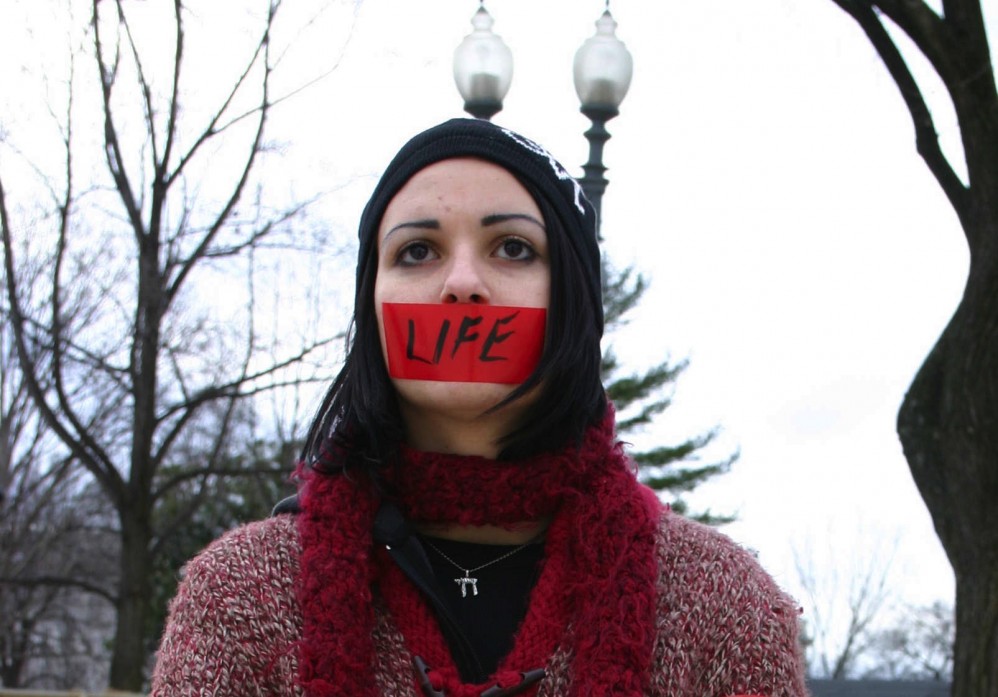
prolife-998x697

As someone who has spent his career in communications of one type or another, I am very interested in the idea of free speech.  I firmly believe it is vital, especially in a democratic republic like ours, to have a robust and vigorous discussion of important issues.  Even when there are opinions expressed contrary to my own, I work to refute those opinions based on evidence and sound logic, not to just squash them so they are not heard.  As we’re seeing more and more often this Presidential political season, when one side tries to drown out another, instead of listening and responding, both sides lose.  Unfortunately, it doesn’t seem that those who support abortion are quite so fair minded when it comes to freedom of speech and while abortion advocates use every means at their disposal to disseminate their propaganda, they protest when their views are not promoted and are loathe to give the pro-life movement a fair opportunity to do the same.

There are many examples of the main stream media and entertainment outlets repeating pro-abortion messages. Last year during the popular show Scandal, the main character Olivia Pope was shown having an abortion with the song “O Holy Night” playing in the background.  During a recently released episode of the hit Netflix series House of Cards, one of the main characters Claire Underwood touted Planned Parenthood’s supposed work doing mammograms screenings (only problem being, they don’t do mammograms).

When a member of the media doesn’t mimic big abortion’s talking points, abortion advocates are quick to cry foul.  Consider the uproar over the Doritos Super bowl ad NARAL accused of humanizing fetuses and the similar outcry when the New York Times’ front page didn’t include any pictures of the pro-abortion crowd at the Supreme Court hearings for Whole Women’s Health v Hellerstedt (never mind pro-abortion advocates had to pay people to be there).

Unfortunately the main stream media and entertainment world do not stop there.  They try to silence the pro-life message by threatening to rape pro-life supporters, as a pro-abortion Purdue University staff member did to a pro-life student activist in February or by creating a special google chrome extension that changes the words “pro-life” to “anti-choice”.  A recent example of this is Cosmopolitan’s decision to publish actress Amy Brenneman’s story about her abortion, but not Congresswoman Diane Black’s thoughtful letter to the editor in response.

It’s fairly obvious why abortion advocates have to employ these kind of dishonest and deplorable tactics.  When they are confronted with science, medicine, and facts, abortion advocates know they will lose every time.  This is why the public is recognizing the value of life more and more often. It is why abortion clinics are closing all over the country and why the younger generation is overwhelmingly pro-life.  Most importantly it is why the demand for abortion is decreasing.  The only answer for abortion advocates is to suppress the truth as much as possible and try to replace it with their version of reality.

Euthanasia and Assisted Suicide Overseas

Prescription Pad And Pills (Newscom TagID: depfirstlight016079.jpg) [Photo via Newscom]

Last week we began a series on euthanasia and assisted suicide by talking about what they are, and what they are not. This week we will discuss some examples of euthanasia and assisted suicide overseas, and look at how they are being used and next week we’ll consider their use in North America (Canada and the United States) before wrapping the series up with a discussion on how to make sure this type of legislation doesn’t become law in Pennsylvania.

There are some alarming examples of people who have committed suicide or euthanasia overseas, which it is important to study as a harbinger of what is to come here in Pennsylvania if we are not vigilant.  Perhaps the most alarming of all these was Pietro D’Amico who died by assisted suicide at a Switzerland suicide clinic in April 2013 because he was diagnosed as being terminally ill, only to have his autopsy reveal he was given a wrong diagnosis.  Then there is the case of Ann, who died by euthanasia in 2012 after accusing her psychiatrist (who subsequently lost his medical license) of sexually exploiting her and several other patients, causing her pain she said was unbearable and making her want to die.  Finally, consider the case of Marty and Eddy, brothers born deaf and going blind. They committed euthanasia together in December of 2012 because they were afraid of becoming dependent on others.  These are just a few of many examples of people who needed help, but instead got a prescription to kill themselves.

It is apparent after looking at several studies done in Belgium that these cases are not the exception, but the rule.  One study published in the Canadian Medical Association Journal in June of 2010 surveyed 1678 nurses.  Of those, 1265 responded and 248 (almost 20%) reported their last patient died by euthanasia.  Almost half of those (120) reported the deaths were hastened without explicit request and in 14 of the cases, the nurses admitted to injecting the patients, even though it is still illegal for them to do so, even in Belgium.  According to a 2015 Belgian euthanasia report, there were 2021 euthanasia deaths that year, more than double the reported euthanasia deaths just 5 years ago…despite the fact that estimates of unreported euthanasia deaths in the Netherlands start at 20% and increase from there.  These, and other similar studies, prove that these laws do not provide the necessary controls and are being abused.  Even Dr. Jan Bernhein, a pioneer of the Belgian euthanasia law admitted during a debate in November 2013 “There are problems with the Belgian euthanasia law”.  As Alex Schadenberg of the Euthanasia Prevention Coalition replied “That is cold comfort to the dead”.

When you consider these cases and studies, among many others, it is clear what a disaster these laws are.  There is little to any real oversight and control, and people are dying who just need a helping hand.  Unfortunately this is not just a phenomenon overseas, as we’ll discuss next week.

National Abortion Provider Appreciation Day

Recently, abortion advocates celebrated a “National Day of Appreciation for Abortion Providers”.  Pro-abortion groups such as NARAL and Planned Parenthood tweeted praise for abortion center employees and volunteers throughout the day.  It’s interesting to consider the careers of some of those they featured…and some they (maybe purposefully) ignored.

One of the quotes Planned Parenthood featured was from abortionist Raegan McDonald Mosley.  This is the same “Dr.” Mosley whose clinic sent a woman to the hospital for what appears to have been a botched abortion.  The same clinic was inspected in 2013 (its only inspection) and was found to be using surgical equipment not properly sterilized.  They also “honored” Susan Robinson who aborts disabled babies as late as 37 weeks if they won’t have “productive lives”.   Maybe the most egregious abortionist featured was Willie Parker who once compared criticism against abortionists to the crucifixion of Jesus.

Sadly, these abortionists, as outrageous as they are, aren’t the worst…which may be why they were highlighted. Consider Stephen Brigham, who has had his license revoked in multiple states, or Naresh Patel who was convicted of selling abortion pills to women who were not even pregnant and who has been accused of raping and sodomizing his patients. Of course, all we have to do is look at the “house of horrors” run by abortionist Kermit Gosnell to find examples of abortionists operating deadly practices.

We live in a world where everyone gets a “participation medal” and every day we’re celebrating one thing or another.  However I think we can all agree that individuals who tear precious lives out of the place they should be safest and end them in the most brutal way don’t deserve appreciation.  They should be prayed for, that they will see the error of their ways and repent…but not celebrated!

Euthanasia and Assisted Suicide


Prescription Pad And Pills (Newscom TagID: depfirstlight016079.jpg) [Photo via Newscom]

Prescription Pad And Pills (Newscom TagID: depfirstlight016079.jpg) [Photo via Newscom]

We are going to be devoting one blog post every week over the next several weeks to euthanasia and assisted suicide: what it is, and what it is NOT; stories and statistics abroad, in Canada, and in the United States; and conclude by talking about how to stop it here in Pennsylvania.

First, let’s consider assisted suicide, or what we refer to as “doctor-prescribed suicide.”  By definition, assisted suicide is when one person is directly or intentionally involved with ending the life of another person–essentially aiding, encouraging, or counseling someone to die by suicide. What many don’t often realize is that in most cases of doctor-prescribed suicide, all the doctor does is issue a prescription for a lethal dose of medication; he or she is not even generally present when the pills are taken.  The victim takes the prescription, fills it like any other prescription, and takes the medication that ends his or her life whenever he or she feels like it.  Doctor prescribed suicide is not “aid in dying” or “assisted death” as pro-death advocates like to pretend.

Euthanasia is the direct and intentional cause of death, usually done by lethal injection.  The only difference between euthanasia and murder is the misguided intent to relieve suffering. It is not about withdrawing medical treatment, or the proper use of pain killing drugs or sedation.  Sometimes in euthanasia cases the victim requests euthanasia for a variety of reasons, but involuntary euthanasia, in which one person decides that another person’s life doesn’t have value and ends it, also occurs.

Whole Woman’s Health v. Hellerstedt

Supreme Court

The Supreme Court recently heard arguments in Whole Woman’s Health v. Hellerstedt.  In the first major abortion case in nearly a decade, the court will rule on the constitutionality of Texas law HB2 and determine whether commonsense reform intended to increase women’s health and safety is an undue burden on abortion facilities.  These Texas regulations came out of the trial of Philadelphia abortionist Kermit Gosnell and his “house of horrors”.  They simply require abortion facilities to have admitting privileges with a hospital within 30 miles and to meet some basic quality of care, facility cleanliness, and safety standards.

The real question is, if the big abortion lobby want abortions to be “safe” as they claim (never mind the fact an abortion is NEVER safe for the baby) why do they support clinics like Gosnell’s “house of horrors”.  According to a University of California study published in Obstetrics & Gynecology last year, complications to the mother are reported in approximately 2.1 % of the abortions that occur in the United States.  That’s despite the fact that only 27 of the 50 states require abortion facilities to report complications…and even in many of those states the reporting is lacking.  So even if we assume those numbers are correct, that means of the approximately 90 abortions that are performed just in Pennsylvania today, 2 women will have some kind of complication (not to mention all the others scarred for life mentally).  Clearly that number will only go up if states aren’t allowed to hold abortion facilities to the same standards as nail salons and tattoo parlors.  Is that really what abortion advocates want?

The question to be decided by the Supreme Court is whether or not these regulations create an “undue burden” on abortion facilities. The good news is that the Supreme Court upheld stricter requirements in 1983 saying they were important to “ensuring public health”.  Even more recently in Planned Parenthood v Casey in 1992 the court determined laws making abortion more difficult or more expensive do not necessarily create an undue burden.

With the passing of Justice Scalia, the court is currently split between 4 conservative justices and 4 liberal justices.  Justice Anthony Kennedy is generally the swing vote on abortion cases, and during arguments he appeared to be open to allowing the regulations to stand in the interest of women’s health.  It is vital we keep Justice Kennedy, and the entire court, in our prayers as they weigh the merits of this case.